Projects and cost
A critical project is losing momentum or becoming more expensive
Identify governance, forecast, decisions and recovery needs before options narrow.
Assess the projectIndependent executive support · Sweden and internationally
Peter Öberg helps executive boards and leadership teams understand complex problems, secure decision-ready evidence and translate decisions into practical execution. My clients have direct access to senior experience from the first conversation to completed delivery.
When is Peter the right support?
Choose the category that best reflects your challenge. Each route helps you define its scope, test possible causes and select a proportionate next step.
Projects and cost
Identify governance, forecast, decisions and recovery needs before options narrow.
Assess the projectDecisions and governance
Test whether alternatives, consequences, risks, ownership and feasibility are sufficiently clear.
Review the decision materialAccountability and authority
Identify where ownership, authority, escalation and follow-up break down.
Assess governanceAI and digitalisation
Assess leadership accountability, law, security, data, adoption and operational value.
Assess AI maturityChange and execution
Examine whether priorities, capacity, behaviours and follow-up support the change.
Assess change capabilityProperty and energy
Connect assets, demand, operations, investment and energy to long-term objectives.
Assess property governanceChoose the right route
Not every client needs to begin with an assessment. Choose the route that best reflects what you already know and what you need to achieve.
Understand
Use an executive assessment to structure the current position, test assumptions and identify which questions require evidence.
Choose an executive assessmentVerify
Test causes, risks and consequences before leadership selects an intervention or makes a material decision.
Discuss an independent reviewDesign
Develop a practical model for decision rights, roles, follow-up and ways of working that fits the organisation.
See how an assignment worksExecute
Strengthen the organisation with senior support able to integrate decisions, risk, stakeholders and execution.
Test the need for senior supportOrient
Begin with a high-level orientation call. We frame hypotheses and identify the evidence required before you select an assessment or intervention.
Start without a fixed problem definitionDefined scope · Fixed fee
Get an independent basis for decisions before choosing your next action. Start with a free introductory conversation.
Property
An independent review of property governance for municipalities and municipally owned companies.
SEK 39,000 excluding VAT
Normally 3 weeks · Delivered remotely
See scope and deliverablesAI
An independent AI review for leadership teams in businesses, municipalities and municipally owned companies.
SEK 59,000 excluding VAT
Normally 4 weeks · Delivered remotely
See scope and deliverablesServices
Support in defining direction, goals, priorities and governance models. I help management and boards move from a broad problem picture to concrete decision material.
Leadership of projects where many stakeholders, dependencies and decisions need to be held together. The focus is progress, responsibility, risk management and results.
Reviews, current-state analyses and recommendations that create decision capacity. Especially relevant in reorganisations, cost pressure or unclear governance.
Reference executive assessment
The 30-question Governance Assessment is designed for boards, leadership teams, steering groups and accountable executives. It examines decisions, accountability, risk, control and execution—and generates questions for leadership discussion rather than a superficial score.
Reference cases
The cases are described at an overall level. The focus is on assignment type, method and client value.
Challenge: A clinically valuable idea depended on several organisations, professions and technical systems working as one process. Unclear interfaces between clinical assessment, technology, information flows and operational ownership risked delaying implementation and weakening accountability.
Peter's contribution: brought the parties around a shared problem definition, mapped critical dependencies and connected clinical needs with technology, governance and implementation responsibility.
Delivery: a documented current state, a workable target process, clarified roles and decision points, and a sequenced implementation plan.
Result: leadership received coherent decision material and a clearer route from medical opportunity to controlled operational implementation.
What the case demonstrates: leadership of complex change where no single function owns the whole problem.
Challenge: Contract terms, invoices, purchasing responsibility and the services experienced by the organisation did not form a reliable overall picture. This made it difficult to challenge costs, manage supplier performance or determine who was accountable for corrective action.
Peter's contribution: reconciled contracts, delivery evidence, costs and responsibilities, separating verified commitments from assumptions and informal practice.
Delivery: a consolidated contract and service overview, material risk analysis, prioritised decision questions and an action plan for supplier dialogue.
Result: management gained stronger commercial control, clearer requirements and a defensible basis for decisions and continued supplier governance.
What the case demonstrates: connecting legal and commercial conditions with practical accountability and execution.
Challenge: Formal preparedness requirements and plans existed, but leadership needed confidence that roles, mandates, priorities and escalation paths would also work under pressure across organisational boundaries.
Peter's contribution: tested the current position against operational demands, clarified critical accountability and connected formal requirements with mandates and practical ways of working.
Delivery: a structured gap picture, clearer role allocation, prioritised measures and an actionable sequence for implementation and follow-up.
Result: leadership gained a shared view of the most important gaps and a practical basis for strengthening preparedness, ownership and follow-through.
What the case demonstrates: making a cross-functional and socially critical area governable in practice.
Challenge: Operational demand, the property portfolio, investment needs and financial constraints were assessed in different parts of the organisation. Without a common evidence base, short-term requests risked driving long-term commitments and costs.
Peter's contribution: integrated premises demand, portfolio data, financial consequences, accountability and feasibility into one leadership-level problem picture.
Delivery: a structured needs analysis, explicit strategic choices, decision criteria and recommendations for continued prioritisation.
Result: decision-makers received a shared basis for comparing needs, challenging assumptions and prioritising property interventions over time.
What the case demonstrates: connecting operational needs with long-term property governance.
Experience
Assignments and experience include private companies, municipalities, regions, public-sector environments and international contexts.
Senior-led collaboration
Peter Öberg Consulting acts as the senior point of contact when an assignment requires several perspectives. Peter remains responsible for the problem definition, assignment structure, quality and client dialogue. Selected independent specialists are involved only when the need is clear.
Collaborating consultant
Björn Ljung Consulting AB
Contributes to larger, execution-intensive assignments where senior analysis, governance, stakeholder anchoring and practical change capability need to be combined.
Björn Ljung on LinkedInCollaborating consultant
Franzel Consulting AB
Provides complementary senior specialist expertise when the assignment's content and scope require a broader team. The exact role and accountability are always agreed with the client.
Niklas Franzel on LinkedInEvery participating consultant is introduced to the client. Accountability, scope, confidentiality and commercial terms are clarified before work begins.
Method
We clarify purpose, mandate, expectations, stakeholders and what must be true when the assignment is completed.
I gather facts, structure the problem picture and formulate actionable alternatives.
Execution is followed up with clear responsibility, short decision paths and concrete documentation.
About Peter Öberg
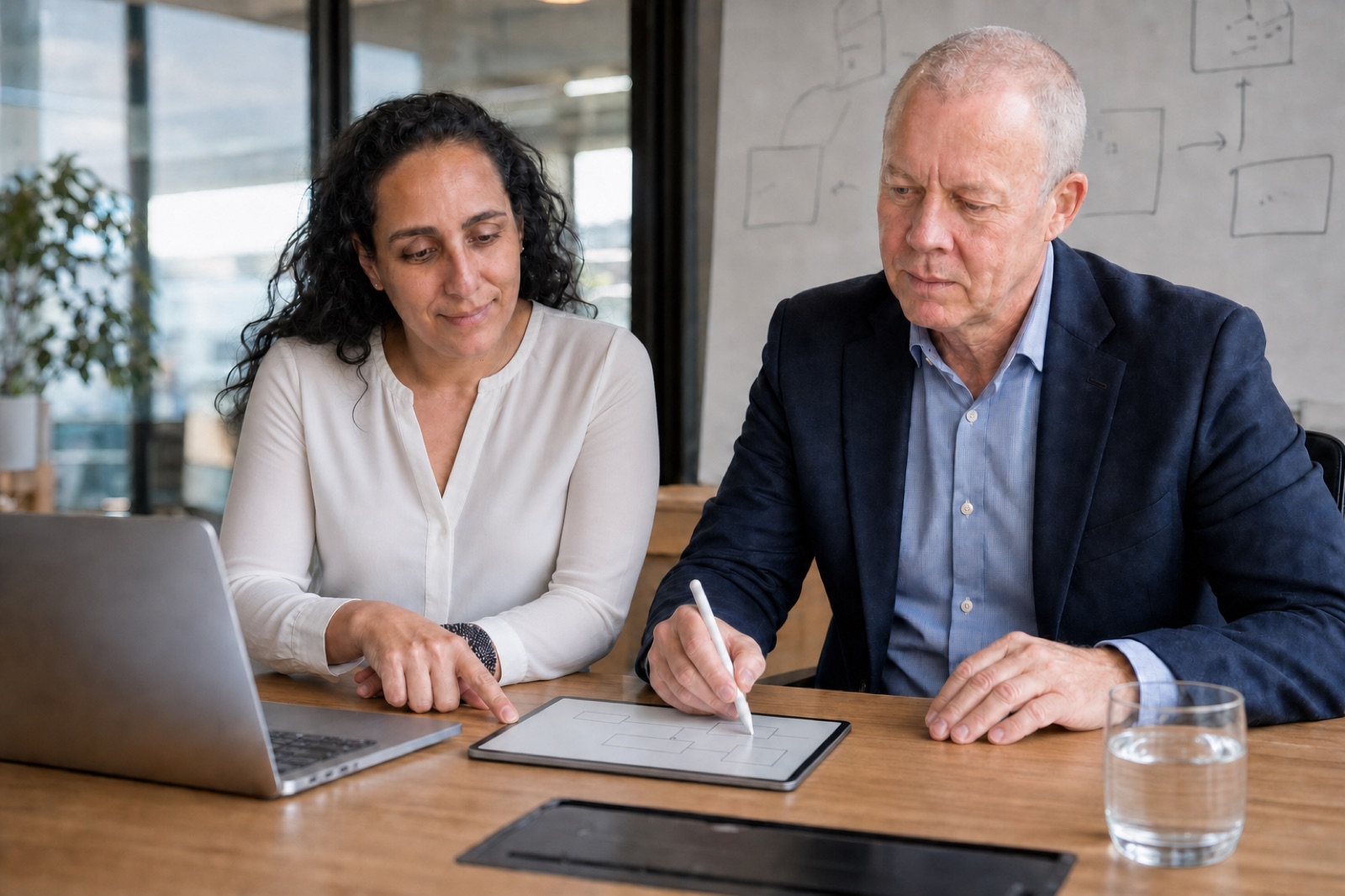
Peter Öberg Consulting works with assignments where experience, judgement and the ability to create progress are decisive. I help organisations make difficult issues understandable, create direction and translate decisions into practical action.
My strength lies in combining strategic understanding with operational precision: listening, structuring, prioritising and driving the process forward without losing quality or responsibility.
Contact
Book a free 30-minute orientation call. You do not need a settled problem definition; a high-level description of the situation is enough to begin.
Start at a high level. Do not send confidential information, sensitive personal data or security-critical material by email. An initial conversation can take place without those details. If further work requires confidential material, scope, confidentiality and information handling will be agreed before anything is shared.
Email: peter@oebergs.se
Phone: +46 70 533 58 32
Company: Peter Öberg Konsult AB
Company registration number: 559592-1080
F-tax: Innehar F-Skatt
Address: Victor Balcks Väg 127, 122 40 Enskede